Sep 29, 2026
The Costs of Going No-Till: An Honest Look
Read More



July 2026
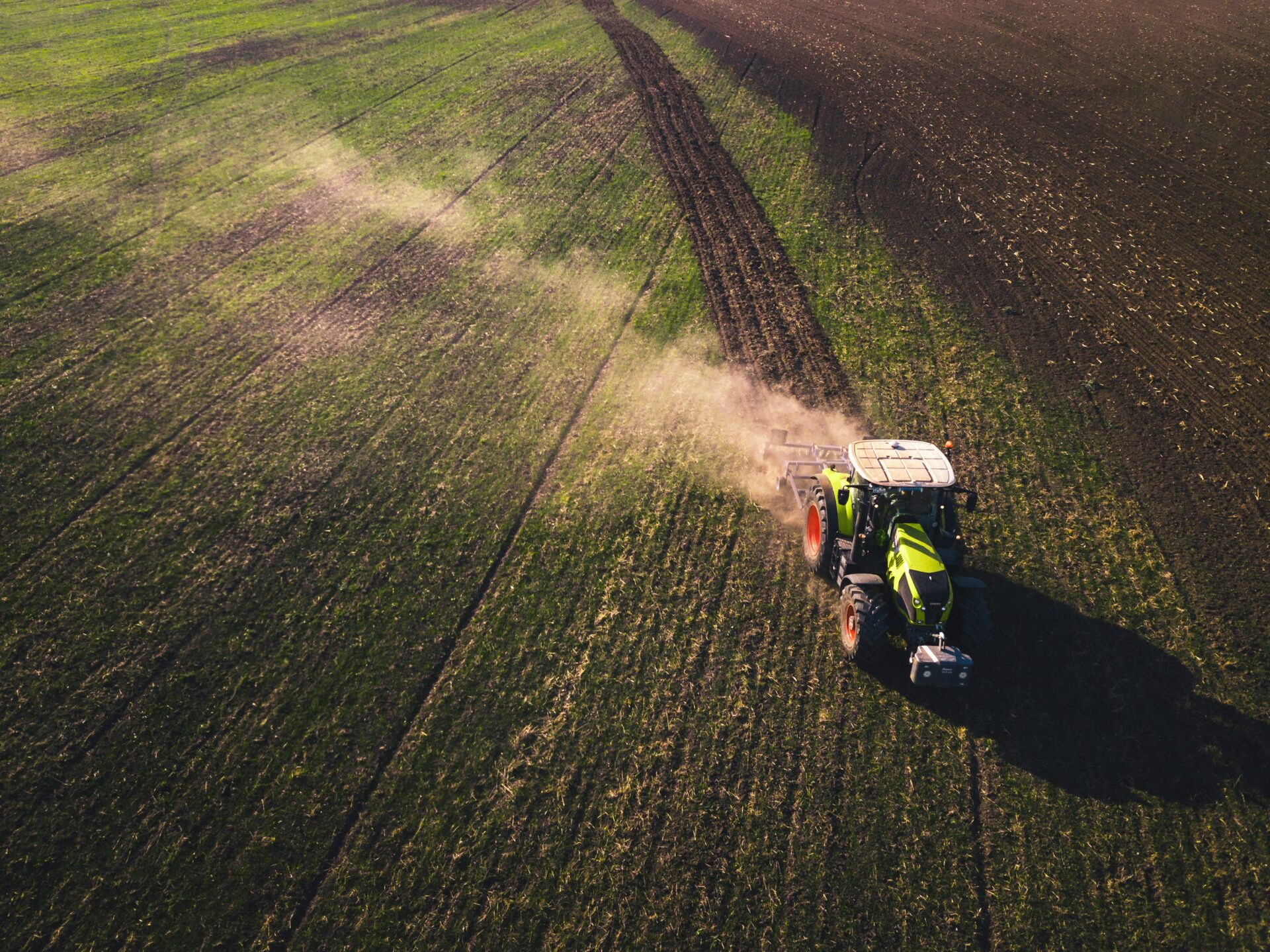
The soybeans are high and the canopy is closing in. Pods are starting to set at the upper nodes.Your agronomist has already called about the R3 window. Maybe disease pressure is building, or the forecast looks favorable for white mold. Maybe you’re just keeping to your program. One thing is for sure, the sprayer is going out.
While you’re lining up the fungicide pass, there’s more happening in that soybean canopy than disease. And there’s more you can accomplish in that single trip through the field than most soybean fungicide articles ever get around to mentioning.

R3 is beginning pod, the growth stage at which at least one pod at one of the four uppermost nodes on the main stem reaches 3/16 of an inch. It’s a defined, narrow window and the agronomic case for it is well established.
University of Missouri Extension research across 33 on-farm trials from 2018 to 2020 found that fungicide applications at R3 increased yield by a median of 1.5 bu/a, though a seven-year expansion of the same study found that the return varies significantly by year and field conditions. In low disease-pressure years, the economics don’t always pencil out. Most growers spray anyway. When you’ve got a full season of inputs, management, and land cost sitting in that canopy, a fungicide pass at R3 is cheap insurance against the years when disease does show up and the losses are real.
Frogeye leaf spot, brown spot, and white mold are the primary threats during this period. Each one is capable of significant yield loss if it establishes during pod fill.
White mold is the exception worth flagging. Fields with a history of pressure may need an application at early bloom, well before R3. By the time symptoms are visible in the canopy, the infection is already set and the window for effective management has closed.
For most programs and most geographies, though, R3 is where the return lives and where the decision should be anchored.
When scouting, check the upper canopy for early frogeye lesions. Check lower canopy moisture and air movement for white mold risk. As you already know, it’s essential to have a full understanding of what you’re walking into before you load the tank. The fungicide you choose and the timing you land on should reflect what’s actually in front of you, not just what the calendar says.
The disease discussion can make the R3 pass feel like it’s only a defensive play, something you do to prevent a bad outcome. That framing is only a small portion of the full picture of your field during this window.
R3 is the beginning of the most critical yield-building period of the soybean season. From R3 through R5, your crop is setting pods, forming seeds, and determining every bushel it will ever produce. Pod number, seed number per pod, and final seed weight are all locked in during this stretch. The plant is at maximum biological output, running every system it has to fill as many pods as possible before the season closes.
What that means practically is that any disruption to plant function during R3 through R5 has a direct and permanent effect on your yield. A disease event during this window doesn’t just cost you green tissue. It costs you pods. A stress event that pulls the plant away from grain fill for days at a time costs you seed weight. Soybean health risk peaks here precisely because the stakes are highest and the plant has the least capacity to absorb a hit.
The fungicide protects the plant’s ability to keep working during this window. That’s the real job. Disease prevention is the mechanism. Protecting pod fill is the outcome.

Temperatures consistently above 86 degrees Fahrenheit during pod fill and seed development reduce pollen viability, increase flower abortion, and lower pod retention. The plant responds to sustained heat the same way it responds to drought. It closes the stomatas to conserve water, reducing photosynthesis, and diverting resources toward survival rather than production.
The pods that don’t set during this window are gone. The seeds that don’t fill don’t come back.
Consistent overnight lows above 70 degrees Fahrenheit prevent the plant from recovering between heat events. Daytime stress is easier to absorb when nights are cool enough for repair. When nights stay warm, each day of heat compounds on the last, and the cumulative effect on seed fill is more damaging than any single hot afternoon. It’s the pattern that matters, not the single event.
A dense, well-closed canopy moderates leaf surface temperature by trapping cooler, more humid air near the lower canopy. That microclimate matters for reproductive structures and for the leaf biology that determines how long the plant stays functional under heat pressure. A canopy that’s compromised by early disease, drought stress, or depleted leaf-surface biology loses that buffer. Pods and seeds that should be forming in a cooler microclimate end up exposed.
The disease risk and the heat stress risk are running in parallel during your R3 window. The fungicide addresses one, but the second can be just as damaging.
There is a microbial community living on the outer surface of every leaf in your field. Up to 10 million bacteria per square centimeter, collectively making up what researchers call the phyllosphere. When these microbes are active and fed, they fulfill specific biological work that affects how your crop handles the stress that your fungicide cannot address.
They produce extracellular polymeric substances, EPS, which are biological films that hold moisture on the leaf surface and buffer the microenvironment around stomata during temperature swings. That moisture retention is directly relevant during the heat events that overlap with your R3 through R5 window. They release signaling compounds that prime the plant’s stress response before symptoms appear, giving the plant more time to prepare before it has to make the resource-rationing decisions that reduce pod fill. They support continued photosynthetic activity under conditions that would otherwise push the plant to close down and wait out the heat.
An active phyllosphere also extends the window during which your soybean plant keeps working through a hot, dry stretch. It is one of the few biological levers you have for what’s happening inside the soybean canopy during pod fill.
The challenge is that the phyllosphere is a harsh ecosystem. UV exposure, rapid temperature swings, and drying conditions between rain events make it difficult for microbes to sustain themselves on the leaf surface. When the microbial community goes dormant, the buffer disappears. The plant is left managing heat and moisture stress on its own during the stretch of the season when it can least afford to.
Your R3 pass is the last meaningful opportunity to address this. After R3, the windows for foliar application narrow considerably. What you put on during this pass, and whether it includes support for the leaf microbiome, shapes how the plant performs through the rest of pod fill.
At R3, you’re planning the timing, watching the forecast, running the math on the fungicide, coordinating equipment and coverage. Once the sprayer is in the field and moving, the incremental cost of an additional tank-mix component is minimal.
PhycoTerra® FX feeds the microbial community on the leaf surface during that pass. It activates dormant microbes, supports EPS production, and builds the biological activity that helps your soybeans manage heat and moisture stress through pod fill. Field data from 2019 through 2023 shows an average yield improvement of 2.6 bu/a on soybeans at a 7:1 ROI. It’s tank-mix compatible with fungicides, herbicides, and micronutrients and doesn’t change your application window or require adjustments to your existing program.
Fungicide protects, PhycoTerra® FX produces. Both jobs get done in a single pass at the timing that already makes the most agronomic sense for your soybeans.

The R3 pass is not just a fungicide decision anymore. It is your best and last opportunity to set your soybeans up for everything that comes between pod set and harvest. Disease, heat, drought stress, and leaf biology all converge in the same two-week window every season. How you approach that window, and how much you accomplish in a single pass, determines a lot about what comes out of the combine in the fall.
Your soybeans are heading into their most critical window. Make the pass count. Learn how PhycoTerra® FX fits into your R3 program and how the PhycoTerra® FX Yield Assurance Program backs your investment at phycoterra.com/yield-assurance.
Preserving the Future of Farming

Learn more about our mission to keep farming economically and ecologically sustainable.
Learn More