Sep 29, 2026
The Costs of Going No-Till: An Honest Look
Read More


September 2026
Every farmer wants more yield. It is the whole point of the work: better genetics, better management and better returns at the elevator. But a bigger yield comes with something few people plan for.
The more grain you take off the top, the more residue you leave underneath. That is the quiet tradeoff of rising productivity.
Your best years in the bin are also your heaviest years in the field, and the residue load farmers manage at planting keeps climbing right alongside their yields. Understanding why is the first step to turning a growing problem into a growing opportunity.
Modern agriculture is a story of steady yield gains. Better hybrids, improved fertility, precision equipment, and sharper management have pushed output higher decade after decade. Since 2000, corn yields are up roughly 30 percent, soybean yields about 33 percent, and wheat yields around 13 percent. Farmers are pulling significantly more off the same acres than they were a generation ago.
That progress is worth celebrating. It is also worth understanding, because yield and residue are two sides of the same plant. A corn plant that produces more grain is generally a bigger plant overall, with more stalk, more leaf, and more root left behind after harvest. The gains that show up in your yield monitor show up again in the fall as biomass on the ground.
In other words, the same improvements that made your fields more productive also made them harder to clear come spring. The residue load is not a sign that something is wrong.
It is a byproduct of doing things right.
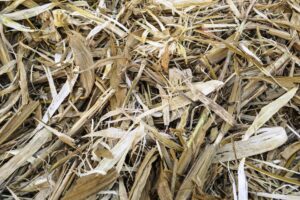
It helps to understand the relationship between grain and residue at the plant level. Every crop splits its growth between the part you harvest and the part you do not.
Agronomists call the harvested share the harvest index. For a lot of grain crops, roughly half of the plant’s total biomass ends up as residue, the stalks, leaves, cobs, and chaff that stay in the field. So when you raise total production, you are usually raising both halves. More grain in the tank almost always means more residue on the ground.
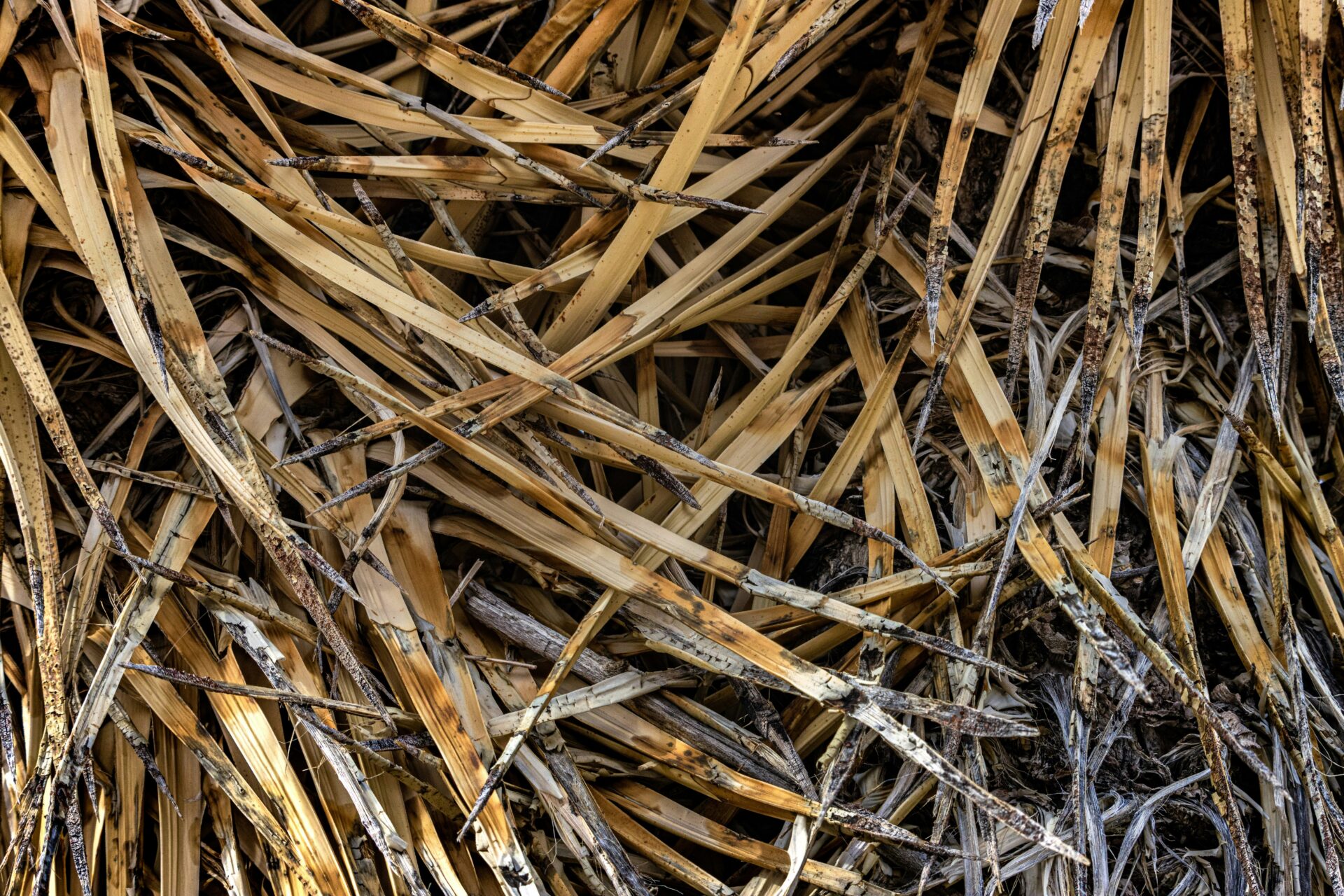
Corn is the clearest example. A high-yielding corn crop leaves behind a heavy mat of tough, slow-to-decompose stalks and cobs. Those stalks are strong by design, bred for standability so the crop stays upright through the season, which is exactly what makes them stubborn to break down afterward. Small grains and other row crops follow the same pattern to varying degrees. The better the year, the bigger the residue load waiting for you in the spring.
Rotation makes this even more concrete. A farmer running continuous corn, or corn ahead of a crop that struggles to establish in heavy residue, feels the residue load most sharply, because there is little recovery time between two high-biomass crops.
As those systems chase higher corn yields, the residue they carry into planting stacks up faster than a rotation with a lighter-residue crop in between. The higher-yielding the corn, the more this matters.
A rising residue load is not just an inconvenience. It changes the economics of the following spring. More residue means:
Each of those costs grows with the size of the residue load. The heavier the mat, the colder the soil, the harder the planting pass, and the more nutrients sitting idle. So as yields rise, the cost of mismanaging residue rises with them. The very success that fills your bin can slow your spring if you do not have a plan for what it leaves behind.
There is a compounding angle here too, and it comes down to the carbon-to-nitrogen ratio, or C:N ratio, of your residue.
High-carbon residue like cornstalks has a wide C:N ratio, meaning it carries far more carbon than nitrogen. As soil microbes break that residue down, they pull nitrogen from the soil to do the work, a process called nitrogen immobilization. That nitrogen is tied up and temporarily unavailable to your crop. A bigger residue load means more high-carbon material, more nitrogen immobilization, and a greater chance of leaving an early-season crop short on nitrogen right when it needs it most. More residue does not just sit there. It can actively compete with the crop you are trying to establish.
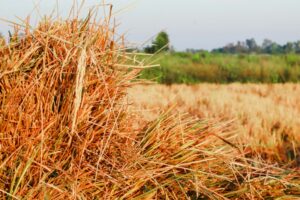
It would be convenient if this were a temporary problem, but the direction of travel is clear. Yields are expected to keep climbing as genetics and management continue to improve. So the residue load is not going back down. If anything, the farmers producing the best yields will keep facing the heaviest residue, year after year.
That makes residue management less of a one-time fix and more of a permanent part of running a high-yielding operation. The sooner it is treated as a standing priority rather than an afterthought, the better.
The old management options do not scale gracefully with this trend. Tilling more residue means more passes, more fuel, and more soil disturbance to clear a bigger mat. Leaving more residue means an even thicker layer to plant into.
Both get harder as the load grows, which is why a lot of farmers feel like they are working harder every spring just to keep up with their own success.
A bigger residue load is a bigger pile of raw material. All that biomass is stored carbon and nutrients that your last crop pulled up and left behind. Broken down, it becomes organic matter and a nutrient source for next year.
The problem is not that you have too much residue. It is that too much of it is not breaking down in time.
Residue breaks down through biology. Bacteria and fungi decompose it into forms your next crop can use. The bottleneck is that, on the average farm, around 75 percent of soil microbes are dormant, without the food source they need to stay active and do the work. Feed them, and a heavier residue load becomes a bigger return instead of a bigger burden.
That is what PhycoTerra® Soil Amendment is built to do. As a microalgae-based soil amendment, it gives soil microbes a balanced meal of proteins, lipids, and carbohydrates, activating the biology that breaks residue down.
In trials, feeding soil microbes this way reduced crop residue mass by up to 21 percent by spring, raised topsoil temperature by up to 5 degrees Fahrenheit, and helped farmers plant up to 2 days earlier, with a return of $59 to $108 per acre. The more residue you have, the more raw material that biology has to convert into next year’s nutrients.

Rising yields are the goal and the residue that comes with that goal is not going away either. The farmers who stay ahead are the ones who stop treating residue as a surprise every spring and start managing it as the predictable byproduct of a productive farm.
Your best years will always leave the most behind. Fed the right way, the biology in your soil turns that growing pile into a growing resource, so the same success that fills your bin builds your soil for the year after.
Ready to make your residue work as hard as your yields? Learn more about PhycoTerra for residue management.
Preserving the Future of Farming

Learn more about our mission to keep farming economically and ecologically sustainable.
Learn More