Aug 11, 2026
How to Test Manure Nutrient Content (and Why It’s Worth Doing)
Read More


August 11, 2026
Manure has a reputation problem. Some growers treat it as a decent backup option when fertilizer prices spike, others see it as more trouble than it’s worth.
Like most reputation problems, it’s built on real experiences that don’t tell the whole story. The nutrient variability is real. The application challenges are real. What often gets left out is just how much fertility value is sitting in that manure to begin with, and how much of it never makes it to the crop.

Manure is an organic carbon source of fertility, which puts it in the same conversation as cover cropping and reduced tillage when it comes to building long-term soil health. It carries nitrogen, phosphorus, and potassium, along with organic matter that helps rebuild soil structure over time. It also contains and builds biology: the same bacteria and fungi responsible for nutrient cycling in a healthy soil system.
The combination of nutrients, carbon and biology is what makes manure fundamentally different from a bagged fertilizer. A synthetic fertilizer delivers a known nutrient load on a known schedule. Manure delivers nutrients that are still bound up in organic material, released over time as biology breaks that material down. That’s not a flaw in manure, it’s just a different mechanism, and it’s one that gets consistently undervalued.
You might be wondering, pound for pound, how does manure stack up against a bag of urea or DAP?
While this framing is common, it misses what makes manure valuable in the first place. Synthetic fertilizer is built for precision, a known analysis, a predictable release, and nothing else along for the ride.
Manure is built differently. Its nutrients release more gradually as biology works through the organic material, and it brings organic matter and biological activity that a synthetic source doesn’t carry at all. That gradual release can be a genuine advantage.
Nutrients that release over weeks rather than arriving all at once are less prone to leaching in a heavy rain event, and the organic matter manure keeps working long after the nutrient release is finished, improving water holding capacity and soil structure in ways a synthetic input simply doesn’t touch.
The tradeoff is that manure’s release is harder to predict without understanding, and supporting, the biology driving it.
Most operations that use both manure and synthetic fertilizer aren’t choosing one over the other, they’re using manure as a foundational carbon and biology source and filling gaps with synthetic inputs where precision timing matters most.
A 2020 industry survey by Manure Manager asked livestock operations to rank their biggest manure management challenges, and the results were telling: the top five challenges weren’t agronomic at all. They were:
Not nutrient performance.
That’s an important distinction, and it’s easy to miss when the frustration of dealing with manure gets lumped together with judgments about whether it works. The frustrations around manure isn’t about whether it works as fertilizer, it’s about the cost and hassle of getting it where it needs to go.
Nutrient variability adds to the frustration: because manure’s nutrient content depends on the animal, the diet, the bedding, and how it was stored, two loads of manure can carry meaningfully different fertility value, which makes it harder to build a precise nutrient plan around.
While storage and variability present their challenges, they aren’t indications that manure is a poor source of fertility. Manure requires more information and more intentional management than a bag of fertilizer. Once that information gap closes, a lot of the hesitation around manure closes, too.

Not all manure carries the same fertility potential, and understanding why helps explain some of the variability farmers run into.
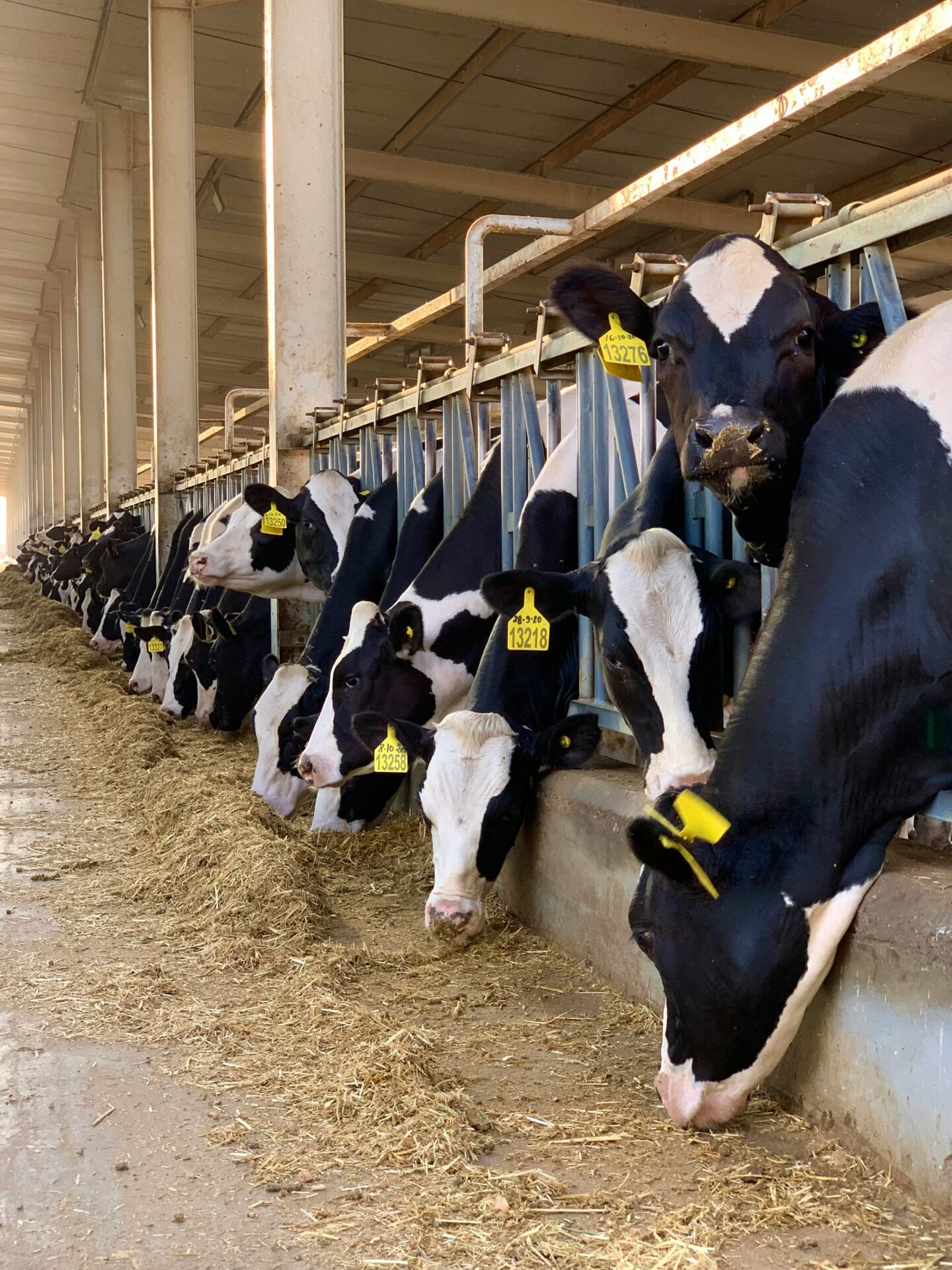
Ruminant animals (cattle, dairy) digest fiber more thoroughly than non-ruminant animals (hogs, poultry). That means ruminant manure often arrives already partially broken down, while non-ruminant manure tends to carry a less-processed, “hotter” nutrient load.
Straw, cornstalks, wood shavings, or minimal bedding all bring different amounts of carbon into the mix, which affects how quickly biology can process the material and how much nitrogen gets tied up in that process along the way.
Manure’s nutrient availability changes the longer it sits, in a holding tank, a lagoon, or a field after spreading. That breakdown happens naturally over time; the question is whether it’s happening efficiently or slowly.
These three factors drive microbial activity in any manure system, the same way they drive it in soil. Without enough of any one of them, the biology responsible for releasing nutrients works more slowly, or not at all.

Managing the microbiology in manure is one untapped variable most farmers haven’t tried yet. Long story short, when manure microbiology is fed a well-balanced meal, they get to work unlocking nutrients that crops can use.
PhycoTerra® is a microalgae-based product built to feed the microbiology already present. In a pit, that means feeding the aerobic and anaerobic bacteria already working there, rather than waiting for ambient conditions to drive their activity on their own, which changes both how fast nutrients cycle and how manageable the material becomes over time.
In testing on stored hog manure, adding PhycoTerra to a pit produced an 8.8x increase in aerobic microbial activity and a 1.4x increase in anaerobic activity 14 days after treatment. That aerobic increase is what drives faster nutrient cycling. The anaerobic increase, while more modest in comparison, reflects real activity happening in a much harder environment to influence, the low-oxygen depths of the pit where solid breakdown occurs.
That increased activity is what shows up as results at pump-out. Trials have shown up to 32% more NPK availability and increases organic matter, on average, in treated manure compared to untreated. On a liquid system, that can mean roughly 5 to 6 additional pounds of nitrogen, 3.6 pounds of P2O5, and 7 pounds of potassium recovered per 1,000 gallons, once treated.
It doesn’t require new infrastructure. Tanks, deep pits, and lagoons can all benefit from active microbiology. It’s also a fit for liquid, dry composting, and field application.
Manure was never a poor source of fertility. It’s a fertility source that depends more heavily on biology to unlock its full value, and that biology is something growers can actively support instead of leaving to chance. Tested, managed, and fed the right way, manure isn’t a lesser option next to a bag of commercial fertilizer, it’s a fertility source with its own real, measurable performance, and increasingly, the data to back it up.
Interested in trying out PhycoTerra Soil Amendment for your operation? There’s never been a better time to try it, thanks to the Manure Value Initiative. Click the link to learn more about how you could get up to 70% back on your product investment.
Preserving the Future of Farming

Learn more about our mission to keep farming economically and ecologically sustainable.
Learn More